
The Problem Isn't That You Care Too Little. It's That Closeness Feels Like Too Much.

Learn How To Stay Present With An Anxious Partner Without Feeling Trapped
The 8-week system for Avoidants Who Want to Stop Pulling Away and Build a More Secure Relationship—
Even If You Understand the Pattern but Don't Know How to Change It
The System That'S HelpING Avoidants Stay Present, Connected, and Secure in Their Relationships
"I couldn't swim in quicksand anymore. It was get out or die trying to make this unhealthy pairing work."

I know exactly how you're feeling right now.
You're sitting there, probably at 2 AM, scrolling through attachment theory forums again, wondering if this pattern is ever going to change.
Maybe you just had another fight with your anxious partner.
Maybe your partner is asking for reassurance and you don't know what to say.
Maybe you're tired of repeating the same cycle over and over again.
Or maybe it's already over. Maybe you're the one lying awake now, replaying what happened, wondering how you turned into someone you didn't recognize, and terrified you'll do the exact same thing to the next person you actually care about.
You love them. You know you do. But every time they try to get close, something inside you just... shuts down.
You wall up. You get the ick. You start finding flaws in everything they do. You become cold, distant, mean even - and you hate yourself for it.
But you can't seem to stop.
Now your daily struggle with intimacy includes:
Feeling pressure every time they want to talk about the relationship
The shame spiral after you've been emotionally unavailable (again)
That awful moment when you realize you've turned them into "the enemy" overnight
Watching them get more anxious, which makes you want to run even further
You've tried everything the "experts" suggested, right?
"Just communicate more".
"Practice vulnerability".
"Read Attached".
"Go to therapy".
"Just be more affectionate".
You're probably thinking: "I love my partner. So why do I keep doing this when I know it's hurting the relationship?"
Then I Discovered Something That Changed Everything.......
After my own relationship imploded spectacularly (and painfully), I realized something that shocked me. I spent two years diving deep into attachment research, working with relationship experts, and most importantly - talking to dozens of avoidant individuals who had successfully transformed their relationships.
What I learned changed everything:
Your "deactivation" isn't you being cruel - it's your nervous system protecting you from perceived threats
The "emotional feedback loop" can be interrupted with specific techniques
Avoidants can learn to stay present during intimacy without feeling trapped
There are ways to meet your partner's needs without sacrificing your autonomy
But most alarming of all:
Most avoidants are unknowingly using strategies that actually INCREASE their partner's anxiety, creating an even more toxic cycle.
I know because I was making all these same mistakes...
Through extensive research and consultation with:
Attachment-focused therapists
Neuropsychologists specializing in trauma responses
Relationship coaches who work specifically with anxious-avoidant pairs
I discovered WHY traditional relationship advice fails avoidants - and more importantly, what actually works.

I call it the "Secure Bridge Method"
By systematically rewiring your nervous system responses to intimacy, I was able to:
Stay present during emotional conversations without shutting down
Communicate my need for space without triggering my partner's abandonment fears
Feel genuine appreciation for my partner instead of constant irritation
Respond to my anxious partner's need for reassurance without feeling trapped or overwhelmed
Break the deactivation cycle before it destroys another relationship
After helping 200+ avoidants work through these same challenges, I've refined the process into a practical step-by-step system that shows you exactly what to do when you feel the urge to shut down, pull away, or create distance...
...even if nothing else has worked before.
But don't take my word for it. Listen to these success stories:
We haven't had one of those toxic fights in over 2 months. The ones where I become completely cold and she becomes completely desperate. It's like we are in a different relationship.

I have just used it for 4 weeks, but I can tell when I'm about to deactivate now, and I have tools to stop it. My boyfriend noticed I wasn’t disappearing as much. We still take space, but it doesn’t turn into chaos anymore. That’s a big difference.

I actually WANT to talk close with my partner now. A few months ago, I would have laughed if someone told me that was possible. The scripts really helped.

The 4 Skills That Help Avoidants Stay Connected Without Losing Themselves

Nervous System Regulation: Learning to recognize and interrupt deactivation before it starts - and the specific breathing technique that keeps you present during difficult conversations

Secure Communication Scripts: The exact words to use when you need space that actually make your partner feel MORE secure - and how to express appreciation without it feeling forced or fake

Intimacy Tolerance Building: How to gradually increase your capacity for physical and emotional closeness without feeling overwhelmed - and the "micro-dose" approach that actually works

Emotional Granularity: The ability to identify and name your feelings before they turn into "the ick" - and the simple daily practice that prevents resentment from building up
INSTANT ACCESS - START BUILDING A SECURE RELATIONSHIP TODAY
Here's Everything You Need To Break The Anxious-Avoidant Cycle
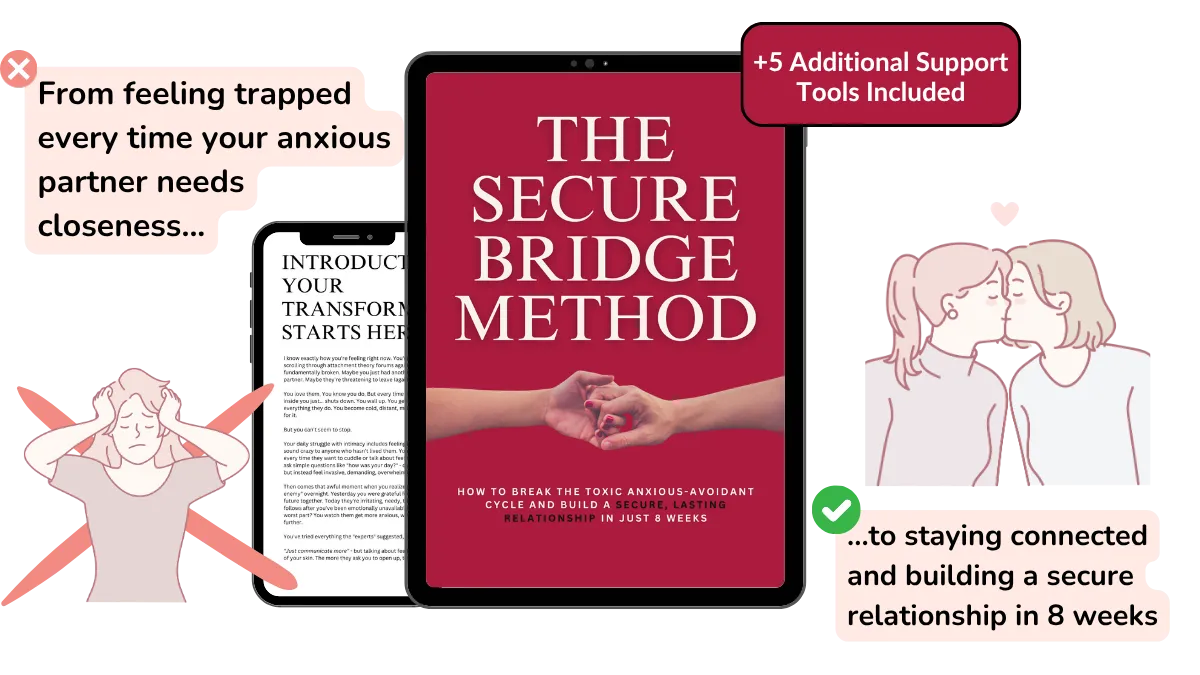
What's Included:
The Complete Secure Bridge Method: Five comprehensive modules that rewire your nervous system response to intimacy
Plus these 5 Additional Tools For Situation-Specific Support

"The Space Script Library" - 15 word-for-word scripts for communicating your need for space with specific timeframes and reconnection plans
"Deactivation Emergency Kit" - 10 step-by-step protocols for catching shutdown in the moment, so you can interrupt the pattern instead of waiting until you've completely disappeared
"Appreciation Without Anxiety" - Practical strategies and language for expressing love, gratitude, and affection when emotions feel foreign
The Conflict Recovery Guide — Exact procedures after you've shut down, repairing the rupture without making it worse, and having the conversation that actually prevents the pattern from repeating
Maintaining Autonomy in Love — The Four Pillars Architecture plus concrete boundary frameworks for protecting your independence while building deep commitment
The Complete System, including All 5 Bonus Tools
Normally: $297 value
Today: $47
BEFORE AND AFTER
What Becomes Possible With the Secure Bridge Method
This guide helps you build a relationship that feels secure without losing yourself.

Before The Secure Bridge Method
Feeling trapped and suffocated whenever your partner wants closeness
Getting "the ick" and finding fault with everything they do
Shutting down or going silent during important conversations
Feeling like you're two different people - loving them one day, resenting them the next
Worrying that old patterns will repeat — even when you care deeply.
Watching your partner become more anxious and desperate, which makes you want to run
After The Secure Bridge Method
Staying present and engaged during emotional conversations
Feeling genuine appreciation and fondness for your partner consistently
Communicating your needs clearly without triggering their fears
Giving and receiving affection naturally, without force or resentment
Feeling secure in your autonomy while being fully committed
Watching your partner relax and become more secure as you show up consistently
The 5 Core Modules
Each module precisely designed to rewire your nervous system response through proven neuroscience-based techniques.
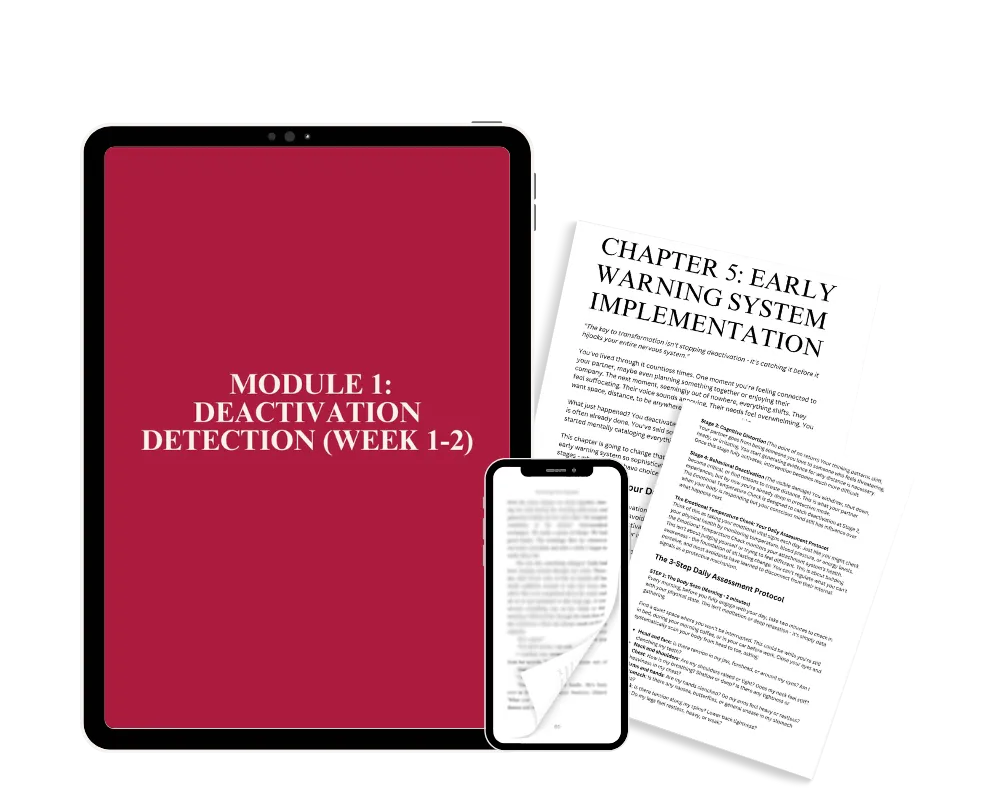
Module 1: Deactivation Detection (Week 1-2)
Understanding your shutdown triggers - this comprehensive assessment helps you identify the early warning signs while building self-awareness that prevents automatic responses.
A short daily check-in that helps you notice shutdown patterns before they escalate
How to recognize when you're turning your partner into "the enemy"
The 3 body signals that predict relationship sabotage

Module 2: Nervous System Regulation (Week 2-4)
Learning to stay online during intimacy - my proven techniques help you remain present during vulnerable moments while maintaining your sense of self.
The "Anchor Breathing" method that keeps you grounded during difficult conversations
How to tolerate your partner's emotions without absorbing or rejecting them
The "pause protocol" that prevents reactive shutdown
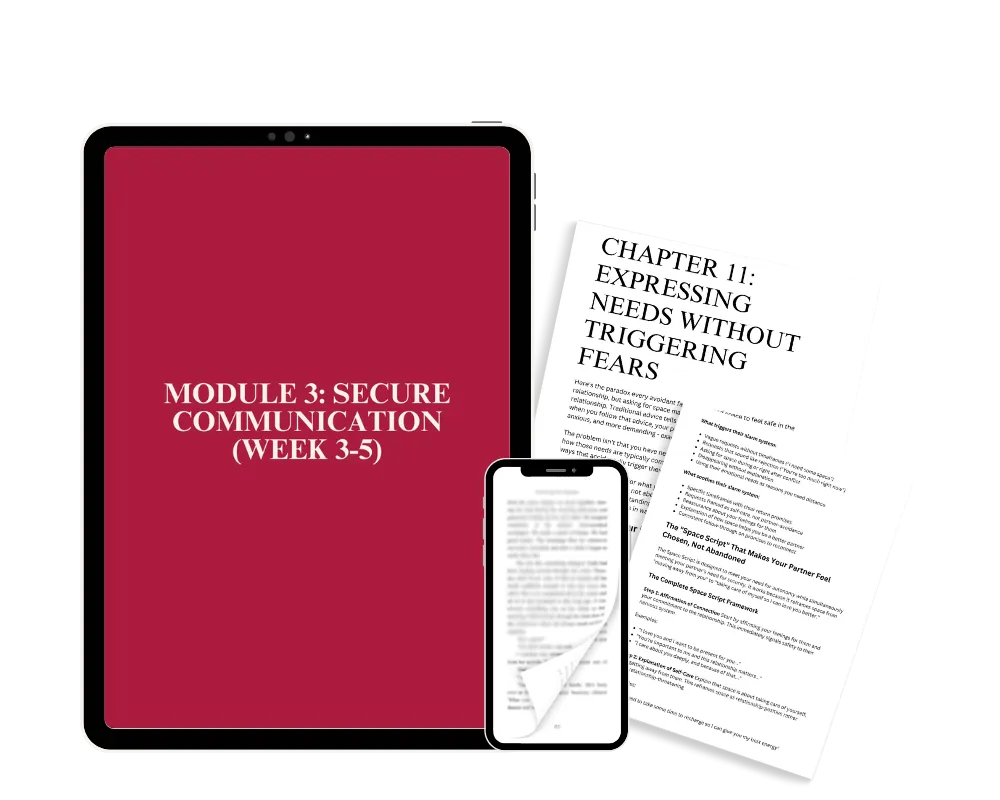
Module 3: Secure Communication (Week 3-5)
Expressing needs without triggering fears - my script library helps you ask for space and independence while actually increasing your partner's sense of security.
The "Space Script" that makes your partner feel chosen, not abandoned
How to express appreciation when emotions feel foreign
The magic phrase that stops anxious spirals in their tracks
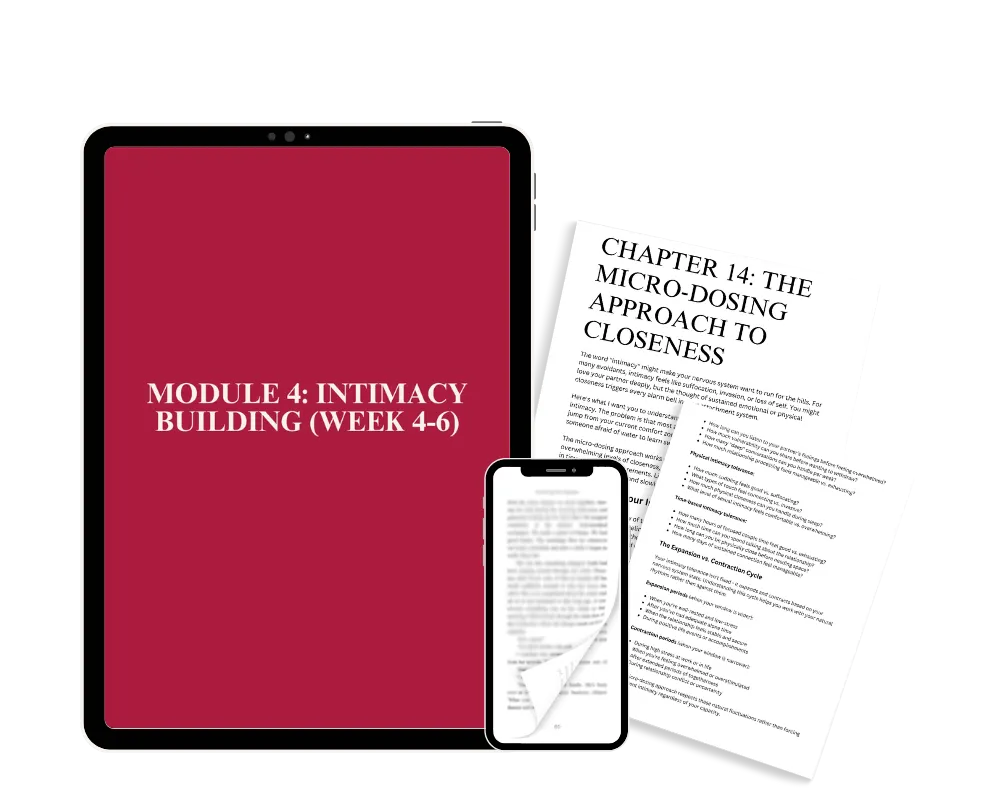
Module 4: Intimacy Building (Week 4-6)
Gradually expanding your tolerance for closeness - my micro-dosing approach helps you increase physical and emotional intimacy without feeling overwhelmed.
The "intimacy ladder" that builds connection without triggering claustrophobia
How to initiate affection when it doesn't come naturally
The timing strategies that make emotional conversations feel safe
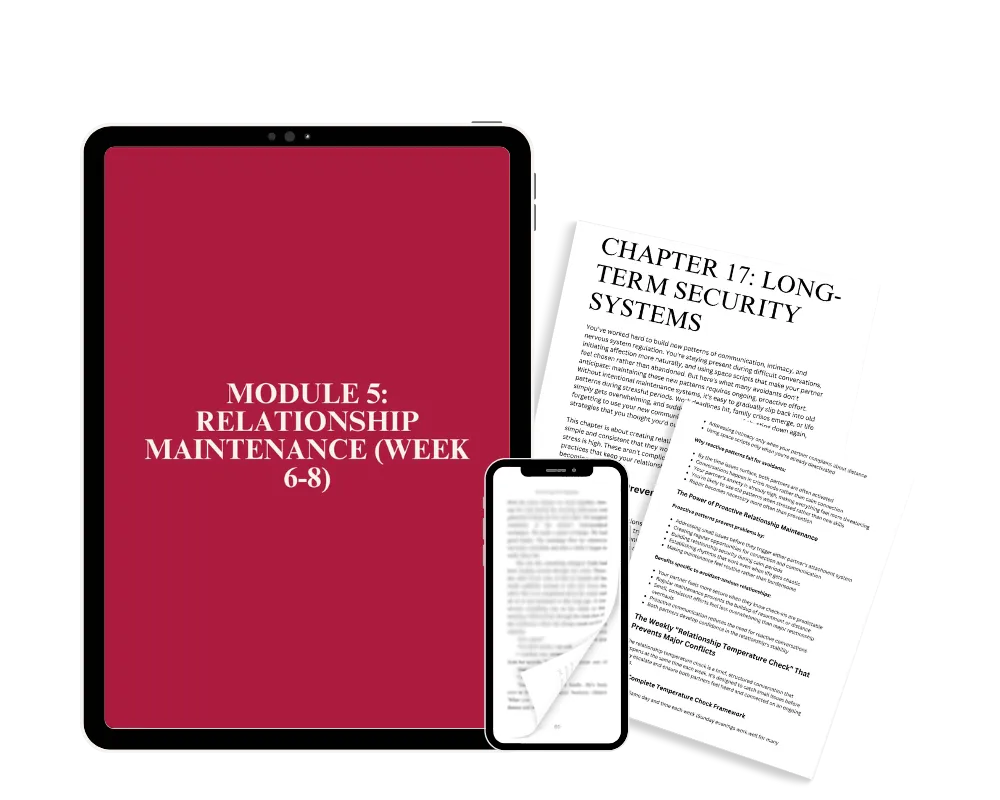
Module 5: Relationship Maintenance (Week 6-8)
Creating long-term security for both partners - my maintenance system helps you stay consistent and present while honoring your authentic needs for independence.
The weekly "relationship temperature check" that prevents major conflicts
How to maintain individuality while building true partnership
The repair protocols that rebuild trust after deactivation episodes
Ready To Stop Pulling Away From The Person You Love?
Explore the Secure Bridge Method
While other avoidants keep repeating the same painful patterns, you'll be building the secure, lasting relationship you've always wanted.
Frequently Asked Questions
"What if my partner is the problem, not me?"
Here's the truth: in anxious-avoidant dynamics, both people are triggered and both people contribute to the cycle. But you can only control yourself. The good news? When you change your responses, the entire dynamic shifts. Many avoidants report that their "anxious" partner becomes significantly more secure once they stop triggering abandonment fears. That said, if your partner is genuinely toxic or abusive, no amount of attachment work will fix that - and the guide includes clear signs that it's time to walk away.
"Will this make me lose my independence or turn me into someone I'm not?"
Absolutely not. This isn't about becoming more "emotional" or forcing yourself to be someone you're not. It's about expanding your capacity for intimacy without sacrificing your autonomy. You'll learn to communicate your genuine need for space in ways that actually work, maintain your independence while being fully committed, and stay true to yourself while meeting your partner's needs. Many avoidants report feeling MORE like themselves after doing this work, not less.
"What if I've already hurt my partner really badly? Is it too late?"
It's only too late if your partner has completely given up - and even then, this work will transform your future relationships. The Conflict Recovery Guide specifically addresses how to repair after deactivation episodes, with realistic timelines and expectations. Many couples have recovered from months or even years of toxic patterns. The key is consistent action over time, not perfect execution. Your partner needs to see sustained change, and this system gives you the roadmap.
"I've tried therapy and read all the books. Why would this be different?"
Traditional therapy often focuses on insight ("understand why you're avoidant") without giving you practical tools for the moments when you're actually triggered. Reading Attached is great for understanding the theory, but it doesn't tell you what to do when you're mid-conversation and feeling overwhelmed. The Secure Bridge Method gives you step-by-step protocols, word-for-word scripts, and body-based techniques you can use in real-time. It's the difference between knowing about attachment theory and actually changing your nervous system responses.
"What if I need more than 8 weeks?"
Eight weeks is the timeframe for completing all five modules and implementing the core techniques. However, everyone's healing journey is different. Some avoidants see dramatic shifts in 4-6 weeks; others need 3-4 months to fully integrate the practices. The materials are yours forever, so you can work at your own pace. Most people report that the first noticeable changes happen within 2-3 weeks, which gives you and your partner hope to keep going. Remember: you didn't develop avoidant attachment overnight, so be patient with yourself.